The 2020 school year is starting, and due to social distancing, your child’s education is probably looking significantly different this year. Many schools are choosing to start or continue remote learning, leading parents to take a more active role in helping their children learn during the school day. However, parents new to homeschooling may find that keeping their children focused on schoolwork throughout the day is more difficult than anyone anticipated—especially amid work and childcare responsibilities.
When students are live-streaming classes and doing assignments on the computer, it’s easy to lose focus or overindulge on screen-time. Additionally, families with multiple children and not having enough educational resources for each of them may have to make tough decisions. How can you ensure that each student is receiving the best education they can during this tumultuous time?
Here are our top five tips to help your child stay on track educationally while homeschooling.
1. Learn about your child’s curriculum
A great first step to set you and your children up for successful homeschooling is to follow an age-appropriate curriculum to get a better idea of what your child needs to master in this school year. With remote learning, teachers will try to cover as much material as they would in a typical year. However it’s important to supplement your kids’ education with activity books to get the practice they need in math, handwriting, reading comprehension, and more.
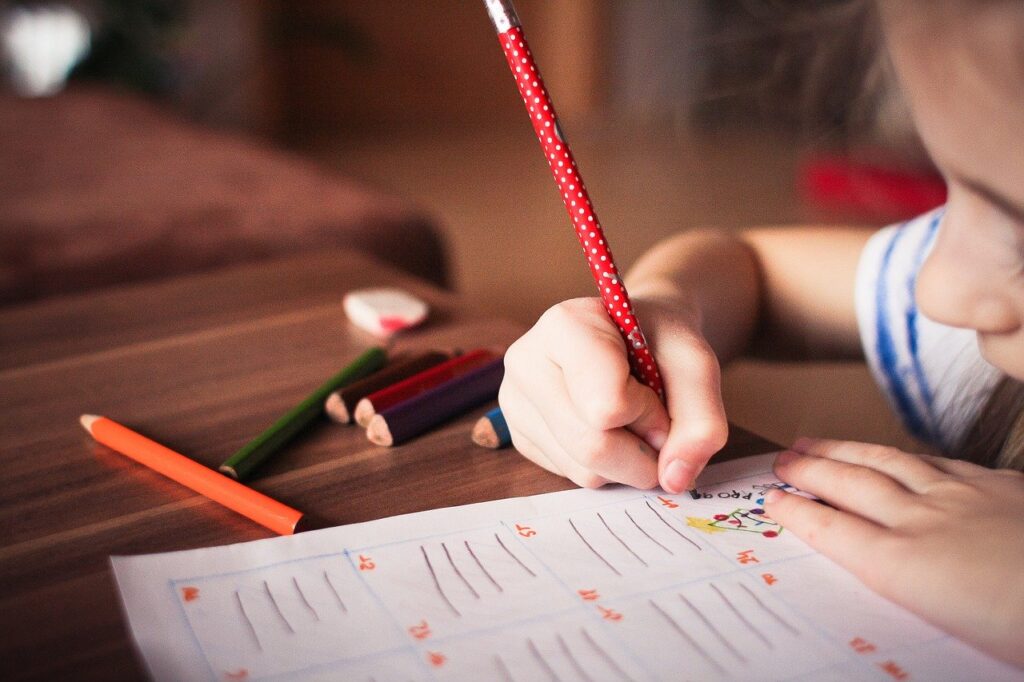
Adding workbooks to your child’s homeschooling day helps keep your children occupied as you work, while also engaging their minds. Students frequently have periods of instructional learning and hands-on practice throughout their school day, so taking the time to complete some workbook pages after watching their teacher’s lesson will help mirror your child’s typical school experience. While one child is watching a class with headphones on, another child can be completing a math workbook at the same time.
Workbooks designed by education publishers, like Scholastic Teaching Resources, Kumon Publishing or Summer Bridge Activities, are helpful to find books that are best for your student’s skill level based on grade level. This is also a great time to master skills that your student may have struggled with the year before, helping them ultimately build a stronger foundation for their teacher’s instruction.
2. Schedule your work and your student’s activities
As a parent, it can be tempting to sit your child down with a task and ask them to work continuously on one subject. You may tell yourself that your students seem more distracted at home. In reality, however, your child is accustomed to a stimulating social and educational environment where they are doing something different every 30 to 45 minutes. That may mean that right now, everyone in the house may need a more regimented schedule planning than they are used to at home, with shorter bursts of focused activity than you may be accustomed to.
Keep your child engaged by changing activities frequently; that may mean reading a science book for 20 minutes, then having a snack, then working on some arts and crafts workbooks or projects, followed by talking about what they’ve learned in class today. While one child may thrive working independently, another may need more hands-on time with you to do their best work.
Regardless, all students benefit from social interaction; while you may still be interacting with your coworkers on video calls, your kids will miss seeing their friends and fellow classmates. That means they may need more engagement from you throughout the day to be most effective. Be patient and ready to adjust your schedule to help everyone make some progress on their work.
3. Help your child learn a new language
Even on days where your student isn’t feeling particularly drawn to their work, practicing a language is a great way to learn together. If you already have a working knowledge of a language, speaking with your child and helping them practice vocabulary activates the frontal and temporal lobes and piques their curiosity. After you’ve done some speaking practice, give your student a book to practice writing or reading storybooks to grow their skills.
Learning a language with your student can be a great way to spend productive time together! Even if you don’t know another language already or you’re interested in expanding your language skills, it can be beneficial for both you and your children to start early with some or bilingual books or alphabet books, especially if the language has a different written alphabet from your first language. Whether your student has a second language in their existing school curriculum or not, social distancing provides a great opportunity to develop new language skills and practice existing skills with other family members.
4. Read about new places, cultures, or subjects
Reading together during the school day and before bed is a great way for parents and children to spend calm, focused time together. Learning doesn’t feel like hard work when children are engaging in a fun story, so story time with Mom or Dad can be a special incentive that breaks up the day. This is a particularly good time to introduce your children to customs and traditions that you celebrated in your childhood, or to teach children about new cultures to expand their knowledge of different people around the world.
Instead of asking kids to memorize when their focus may not be at its peak, learning social studies and geography can be done through independent reading stories. By asking your child to read a book or a chapter of a book and then discussing it together, you can help your student improve their reading comprehension while also developing their vocabulary. For example, we love these great biography books or the Magic Tree House series for learning about history. These engaging stories on topics your kids enjoy establish a love of reading and learning that extends far beyond the classroom and stays with them for life.
5. Use low-cost educational materials to help your students learn
We and many other educational organizations are providing discounted study materials and other resources to help parents like you thrive during this unpredictable time. Take advantage of these low-cost educational books and other available educational resources around us! These books and study materials are specifically designed to make home-based learning easier on both you and your children. With access to so many learning resources, your child can explore a museum with a virtual tour, discover a new passion like coding, or find fun educational games! This is a great time to find new interests that will keep your kids from feeling bored.
Cut yourself and your kids some slack
Homeschooling success right now can look many different ways. For some families, watching a teacher’s lectures may be the biggest win, while other families may be using this time to help their students get ahead. This is a challenging time for most working parents who are accustomed to an uninterrupted workday, but it’s also important to remember the big changes your child is experiencing. One of the strengths of teachers is setting age-appropriate learning expectations, so follow the teacher’s lead and know your student is doing their best given the circumstances.
By acknowledging your student’s needs and giving them engaging material to work on throughout the day, you can help your child learn effectively even when they’re not in the classroom. Take a deep breath and remember—this is new for everyone and it’s all temporary. You’re doing great, Mom and Dad!